

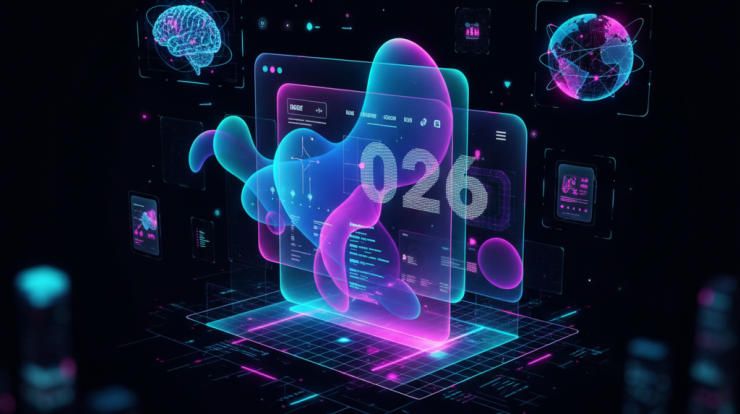
Are you wondering how to make your website stand out in a crowded digital world? The web is changing faster than ever before, and static pages are becoming a thing of the past. In 2026, your website must feel alive, intelligent, and deeply human to keep visitors interested. The new standard is built on AI-driven personalization, immersive 3D motion, and hyper-accessibility. Websites are evolving from simple digital brochures into active partners that think and act for the user. By using organic shapes, bold styles, and smart technology, you can create a brand experience that sticks. This guide shows you exactly what to do to stay ahead of the curve and win over your audience. Learn why these changes matter for your business success and how they will shape the future of branding. Let’s dive into the most important trends that will define the internet in 2026.
Contents
- 1 Why follow website design trends for 2026?
- 2 1. AI-Driven Hyper-Personalization
- 3 2. Immersive 3D and Spatial Design
- 4 3. Micro-Interactions and Motion Design
- 5
- 6 4. Bold Kinetic Typography
- 7 5. Organic Shapes and Anti-Grid Layouts
- 8 6. Sustainable and Ethical Design
- 9
- 10 How can you apply these trends to your website successfully?
Why follow website design trends for 2026?
You might think your current website is “good enough” for now. But in a fast world, “good enough” often means getting left behind by competitors. Users now expect websites to understand their needs almost instantly. Following trends helps you build immediate trust with your new visitors. It shows that your brand is modern, fresh, and ready for the future. New design trends also improve how your site works on mobile phones and tablets. If you ignore these shifts, your site may feel old and hard to use. Staying updated ensures your site remains fast, safe, and accessible to everyone.
1. AI-Driven Hyper-Personalization
This technology uses machine learning and live data to build a custom journey for every visitor. It moves past simple group marketing by looking at specific clicks and locations to predict what a user wants. This allows a brand to provide the right content or support at the exact moment it is needed, making the site feel proactive.
How it works:
- It collects specific details from searches, clicks, and social interactions.
- Advanced algorithms study these patterns to build a unique user profile.
- It forecasts future needs so the site can provide solutions early.
- The digital interface updates instantly based on the user’s current mood or task.
Benefits:
- Visitors feel a deep connection to the brand because the site “gets” them.
- Tailored offers lead to a significant boost in sales and sign-ups.
- Businesses see more revenue as they move away from one-size-fits-all strategies.
- Automated support handles common issues, which lowers business costs.
2. Immersive 3D and Spatial Design
Spatial design uses 3D environments and technologies like Augmented Reality (AR) to merge the digital and physical worlds. By adding layers of depth and scale, it turns a flat screen into a space that users can explore. This trend is becoming vital for industries that need to show scale, such as real estate or medical training.
How it works:
- 3D Layouts: Designs focus on volume and dimensions rather than flat icons.
- Reality Mixing: Uses VR and MR tools to let users interact with objects in their own room.
- Realistic Lighting: Advanced rendering makes digital materials look and react like real-life textures.
- Depth Cues: Visual tricks like background blurring help users focus on key items without feeling lost.
Benefits:
- Design Accuracy: Lets architects and designers walk through a building before it is ever built.
- Safe Education: Allows medical students or pilots to practice high-stakes tasks in a safe digital world.
- Deep Immersion: Gamers and shoppers enjoy a much more realistic and exciting experience.
- Better Choices: Realistic 3D previews help customers buy products with more confidence.
3. Micro-Interactions and Motion Design
These are small, intentional animations that provide quick feedback when a user interacts with a page. From a button that pulses to a smooth loading bar, these details make a site feel responsive. They act as helpful signals that guide a user through a task, making the digital journey feel more natural.
How it works:
- Quick Response: Keeps animations very short, usually under half a second, to stay fast.
- Status Updates: Visual cues show if an upload is finished or if an error happened.
- Lightweight Tech: Uses CSS instead of heavy scripts to keep the website running quickly.
- Interactive Elements: Features animated switches and hover effects to make clicking feel satisfying.
Benefits:
- Less Confusion: Users always know if their action worked because of the visual feedback.
- Higher Interest: Subtle movements keep the user’s eye moving and engaged with the content.
- Polished Branding: High-quality motion makes a website look expensive and well-made.
- Smoother Flow: Transitions help the user move between pages without feeling a sudden “jump.”
4. Bold Kinetic Typography
Kinetic typography is a high-energy style where text moves and changes shape to tell a story. It uses thick, heavy fonts that scale or distort to show emotion and urgency. This makes the words themselves act as the main visual art, reducing the need for heavy images or videos.
How it works:
- Moving Text: Animates single letters or whole words to convey a specific feeling.
- Rhythm Matching: The movement of the text often follows the beat of music or the speed of scrolling.
- Smart Weighting: Uses variable fonts to change how thick or thin a word looks in real-time.
- 3D Effects: Adds shadows and camera angles to give the letters a sense of physical weight.
Benefits:
- Strong First Impression: Large, moving words grab attention faster than a standard photo.
- Emotional Connection: The “dance” of the text can show excitement, calm, or urgency.
- Clear Messaging: High-impact fonts make the brand’s main message impossible to miss.
- Fast Loading: Since it uses fonts instead of big video files, it keeps the site performance high.
5. Organic Shapes and Anti-Grid Layouts
This trend moves away from rigid boxes and straight lines toward fluid, natural shapes. By using “anti-grid” designs, websites feel more like living art and less like a computer program. It uses irregular curves and overlapping layers to create a “handmade” look that feels approachable and warm.
How it works:
- Fluid Graphics: Uses shapes inspired by nature, like flowing water or soft clouds.
- Non-Linear Paths: Places images and text in unexpected spots to create a unique visual flow.
- Modern Styling: Leverages tools like clip-path to create soft edges and curved dividers.
- Storytelling Layouts: Uses asymmetrical designs to lead the user’s eye through a narrative.
Benefits:
- Brand Personality: Helps a company look creative and original compared to standard templates.
- Approachable Feel: Soft shapes make technology feel less intimidating and more human.
- Visual Rhythm: The lack of strict boxes creates a sense of motion that keeps users curious.
- Memorable Experience: An unusual layout sticks in the user’s mind much longer than a basic grid.
6. Sustainable and Ethical Design
Sustainable design focuses on building a “green” internet by reducing the energy a website uses. It also prioritizes ethics by being honest about data and avoiding tricks that confuse users. In 2026, a great design must be good for both the person using it and the planet.
How it works:
- Eco-Friendly Hosting: Choosing servers that run on clean energy to reduce carbon emissions.
- Lean Development: Writing efficient code that requires less processing power from devices.
- Smart Assets: Using modern formats like WebP to keep images small without losing quality.
- Honest UX: Focusing on clear privacy rules and helpful navigation rather than “dark patterns.”
Benefits:
- Top-Tier Speed: Lighter websites load instantly, which is great for SEO and user happiness.
- Increased Trust: Users feel safe when a brand is transparent about how it uses their data.
- Cost Efficiency: Using less bandwidth and storage can lead to lower long-term hosting costs.
- Brand Respect: Modern customers prefer brands that show they care about social and green issues.
How can you apply these trends to your website successfully?
To make these 2026 trends work, you must focus on the user’s needs rather than just the visual flash. A successful website combines high-tech features with a smooth, easy-to-use experience that keeps people coming back.
- Focus on Purpose: Only use trends that help your customer. If a 3D element or animation makes the site harder to use, remove it.
- Balance AI & Human Touch: Use AI to handle data and speed, but keep your brand’s voice and empathy human so you don’t sound like a robot.
- Prioritize Speed: High-quality graphics must not slow down your site. Use clean code and optimized files to ensure the page loads in under two seconds.
- Keep it Consistent: Use a unified design system so your colors, fonts, and shapes look professional and the same on every page.
- Test and Improve: Watch how users interact with new features. Be ready to change parts of the design based on what actually helps people stay longer.
Conclusion
The future of web design is interactive, inclusive, and very smart. You now have the key trends and the strategy to transform your online presence for 2026. Don’t let your website fall behind while the rest of the world moves forward. Start planning your update today with a focus on your user’s needs. Your brand deserves a website that is truly ready for the future.
How to implement 3D immersive elements in web design?
Use lightweight 3D tools and focus on user experience. Add 3D product views, scroll-based depth effects, or AR previews. Technologies like WebGL and Three.js help create 3D elements. Always optimize files to keep the website fast and mobile-friendly.
What are the best tools for AI-driven personalization in 2026?
AI website builders, CRM personalization tools, and analytics platforms are widely used. Tools like Adobe Experience Cloud, HubSpot, and AI chatbots help show custom content based on user behavior and data.
Which brands use sensory branding trends?
Many modern brands use motion, sound, and interactive visuals. E-commerce brands use 3D previews, luxury brands use smooth animations and sound cues, and tech brands use AR and haptic feedback to improve user experience.
What are accessibility best practices for 2026 web trends?
Use strong color contrast, readable fonts, and alt text for images. Make websites keyboard-friendly and screen-reader compatible. Keep layouts simple and avoid heavy motion. Fast loading and mobile responsiveness are also important.
What is the difference between web design trends in 2025 vs 2026?
2025 focused on minimal design and basic personalization. 2026 focuses more on AI personalization, immersive 3D, motion design, and sustainable design. Websites now feel smarter, interactive, and more human-centered.
Netstager is a leading digital marketing agency in Dubai and one of the most trusted web design and digital marketing companies in India, offering SEO, Google Ads, social media marketing, web design, mobile apps, branding, and software development to help businesses build a powerful and results-driven online presence. Whether you’re looking for creative digital strategies, performance-focused marketing, or technology-driven web solutions, our teams deliver end-to-end services that help brands grow and connect effectively with their audience. For more details, visit our UAE and India websites for support.
Contact Our Development Team Today: At +91 844 844 0112 or reach out via email at hello@netstager.com.
